Revd Matt Allen || 23 April 2026
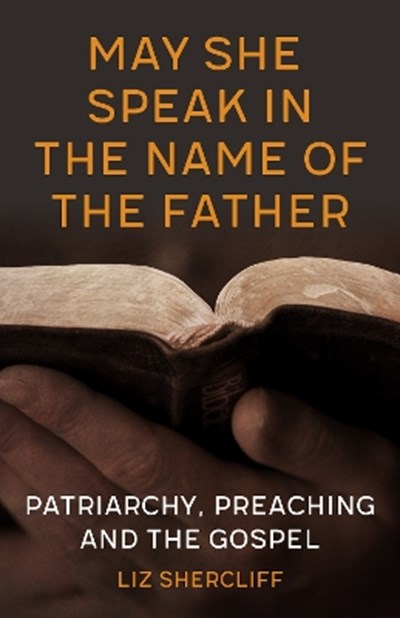
Recently, I met up with The Revd Canon Dr Liz Shercliff. Liz is based at Luther King House and also tutors for Emmanuel in homiletics. The reason for our meeting was to discuss her new book – May She Speak in the Name of the Father – in which Liz explores challenges those involved in theological education to think about issues of social justice and gender, based on her research of how women have been taught to preach in various institutions.
Matt: Liz, as ever, it’s good to see you. Thank you so much for being willing to talk about your book with us at Emmanuel, and for all that you do to contribute to the preaching element of our Ministerial Formation Programme. Congratulations on your latest book. What do you think is the key message that you would love your readers to take away from it?
Liz: I think if it’s academic staff, I’d like them to be more honest about the kind of church that they’re kind of training people to work in. If it’s the women students, I’d like them to realize that the church remains a patriarchal institution and that from colleagues and from congregation members, they will have everyday sexism, the things that you don’t really notice, but that form the fertile ground for worse things to come. And for male students, I think allyship is really important. So, we need people who may not be women themselves, but who support women’s ministry to acknowledge that there is a problem and to say, “yeah, I want to be an ally in that” and when I hear something said that is obviously sexist, I’m going to challenge it.
Matt: Great. Your work is really at the cutting edge in this area for us nationally, if not globally. What are you seeing emerging now in terms of the main issues related to preaching that you want to call out and highlight in this book?
Liz: I think increasingly, because of polarised thinking in the world where you either think one thing or the other and there’s no grey areas, one risk is that preaching does the easy stuff – the low hanging fruit that is indisputable. This might mean speaking uncritically about the male heroes of faith, for instance portraying the prophets as pioneers of social justice without ever thinking, what about the women? Not just, Have I considered the female heroes of faith? But What do these prophets say about women? Where are the women’s stories? And when do women in the congregation hear about themselves? It’s implied heavily in the Anglican liturgy that women must read themselves in, especially in the traditional liturgies which lack inclusive language. There’s no reason for that when it comes to preaching because women are in the Bible and some of them are really prayerful and they make massive differences, but we rarely hear about them or we hear one side of their story or they’re diminished in some way. And so I would love preaching to be more imaginative and think about these women who did such amazing things, whose stories are so interesting and tell us so much about the God and the Christ that we purport to represent and to serve.
Matt: Thanks, Liz. I’ve really loved the Out of the Shadows books that yourself and Kate Bruce have written because you’re actually resourcing preachers to do that. Thinking about theological education, which is a big focus of your book, what is the change you’d most like to see in say the curriculum or the modules or the shape of the teaching for preachers who are starting now, who are ordinands or lay preachers in training? What would you like to see change?
Liz: One key thing I’d like to see change is that we don’t have theology and then feminist theology, black theology, disabled theology. We need to acknowledge where theology is actually men’s theology. Likewise, the whole of the range of theology from what we might regard as systematic or analytic, all the way through to disabled theology, queer theology should just be recognised as theology because people experience God differently. I think that should be reflected in the curriculum in the way that we include things or not include things. One of the things I talk about in the book is that whoever is in power, i.e. Who is in the role of making these decisions will always decide what is valid knowledge and valid knowledge will reflect the biases, the locatedness of those people, whether they realize it or not. Another thing I’d like is for women students to be ambitious to do higher qualifications because without the higher qualifications, they’re not able to take on tutoring jobs, teaching jobs, and we need more women in those places to say, “What about the women in the Bible? What about women’s experiences of God?” One of the lovely things I really like theologically is how you can use women’s physical experiences to explain bits of the biblical story that are really difficult. Karen O’Donnell, for example, talks about in the body of a miscarrying woman, that’s like Easter Saturday because life and death coexist inseparably. And you wouldn’t get that if you only heard about men’s bodies, which is what normally happens.
Matt: A lot of Karen Donald’s recent work, her work on the Song of Songs for instance, is fascinating as she reads the text from a female perspective and with a lens of trauma. It sheds beautiful, fresh light on the text. One of the things we share is that we are absolutely committed to saying that God continues to speak through the Bible in lots of different ways. It’s not a closed text. So, what I eally appreciate about the work that you’re doing is you’re opening our eyes to see how we miss out when we narrow down what we think the Bible must say based on those prejudices and biases. I agree with you completely about recognizing our locatedness as trainee preachers. In our theological education around preaching, we have to be growing people’s skills in thinking reflexively and recognizing how they’re in their preaching because I feel like that’s how we get people to start to talk about real faith.
Liz: I agree. I think we treat all lives, but particularly women’s lives as holy ground where we can find things of God that have not been previously uncovered. There was a question, wasn’t it, about can a male savior save women? And I think the answer is yes, but it’s yes, because God is not male, but God is male, female, all the other perspectives on which you can find God. I think a thing that we seem to be missing in some parts of the church is for me, faith is being inquisitive about stuff – wondering why and wondering how.
Matt: I think faith requires commitment to discovery, to curiosity, which, I agree, reflects divine creativity, divine curiosity. But, back to this new book. What are the encouraging conversations that you’ve been part of that have emerged around this book’s publication?
Liz: I was on UCB radio recently. That was really interesting, partly because I discovered them to be lively, engaging, and fascinated by what I had to say about the book. Also, we spoke about ++Sarah, the new Archbishop of Canterbury, and they asked me to pray for her. I continue to give talks and think about my ongoing writing and have a book launch coming which follows on from a meeting of the Faith Life of Women and Girls Symposium, which is at Chester University.
Click here to read more about the Symposium
In the early evening, after the Symposium, there’ll be a book launch, which is an open event. (Details to follow)
Matt: Excellent! Thanks for sharing this update!
Matt Allen speaking to Liz Shercliff about May She Speak in the Name of the Father
Click here to purchase from Church House bookshop
DISCOUNT CODE